

.svg)

What I Learned About Hokusai While Visiting His Museum
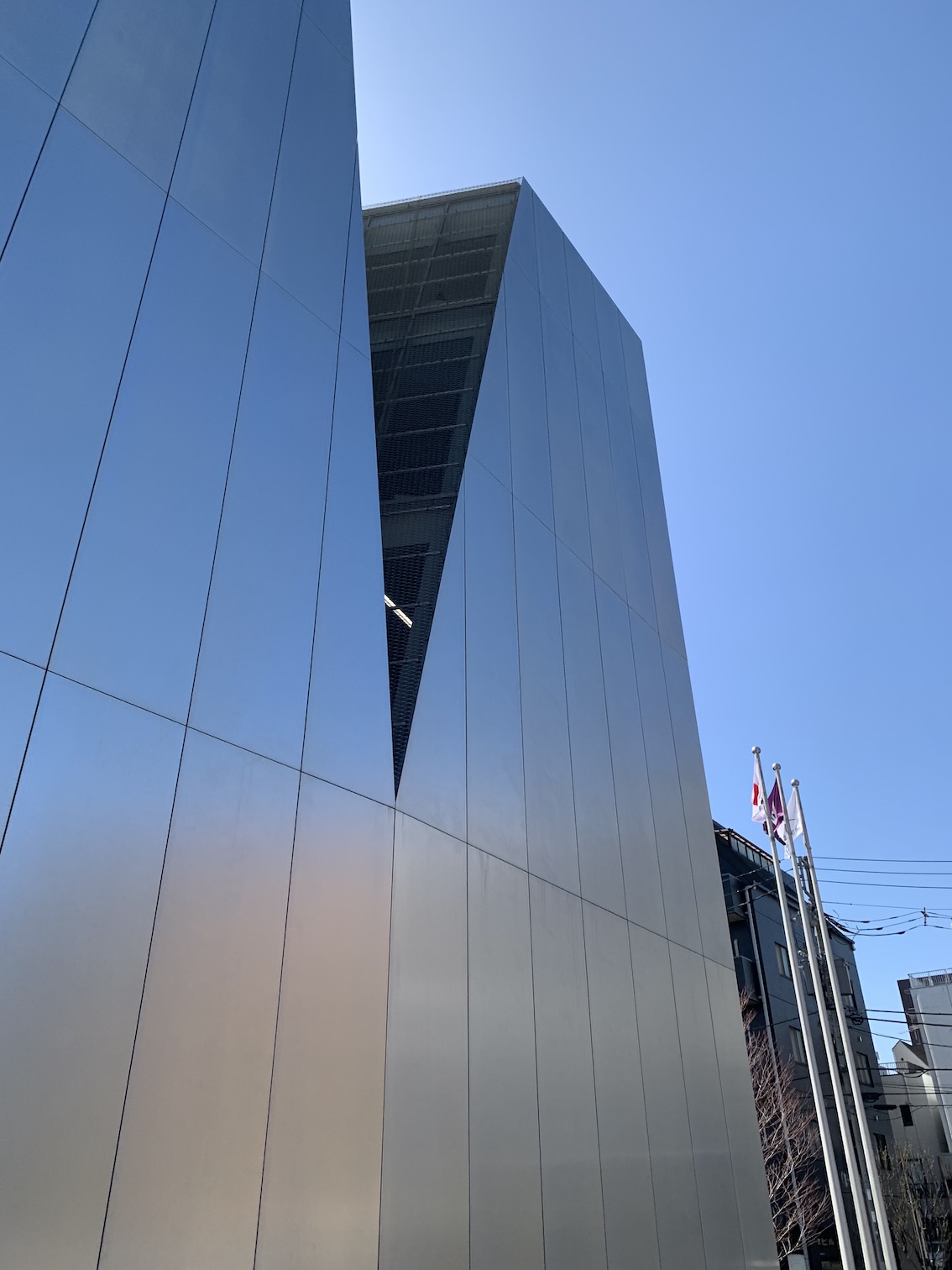
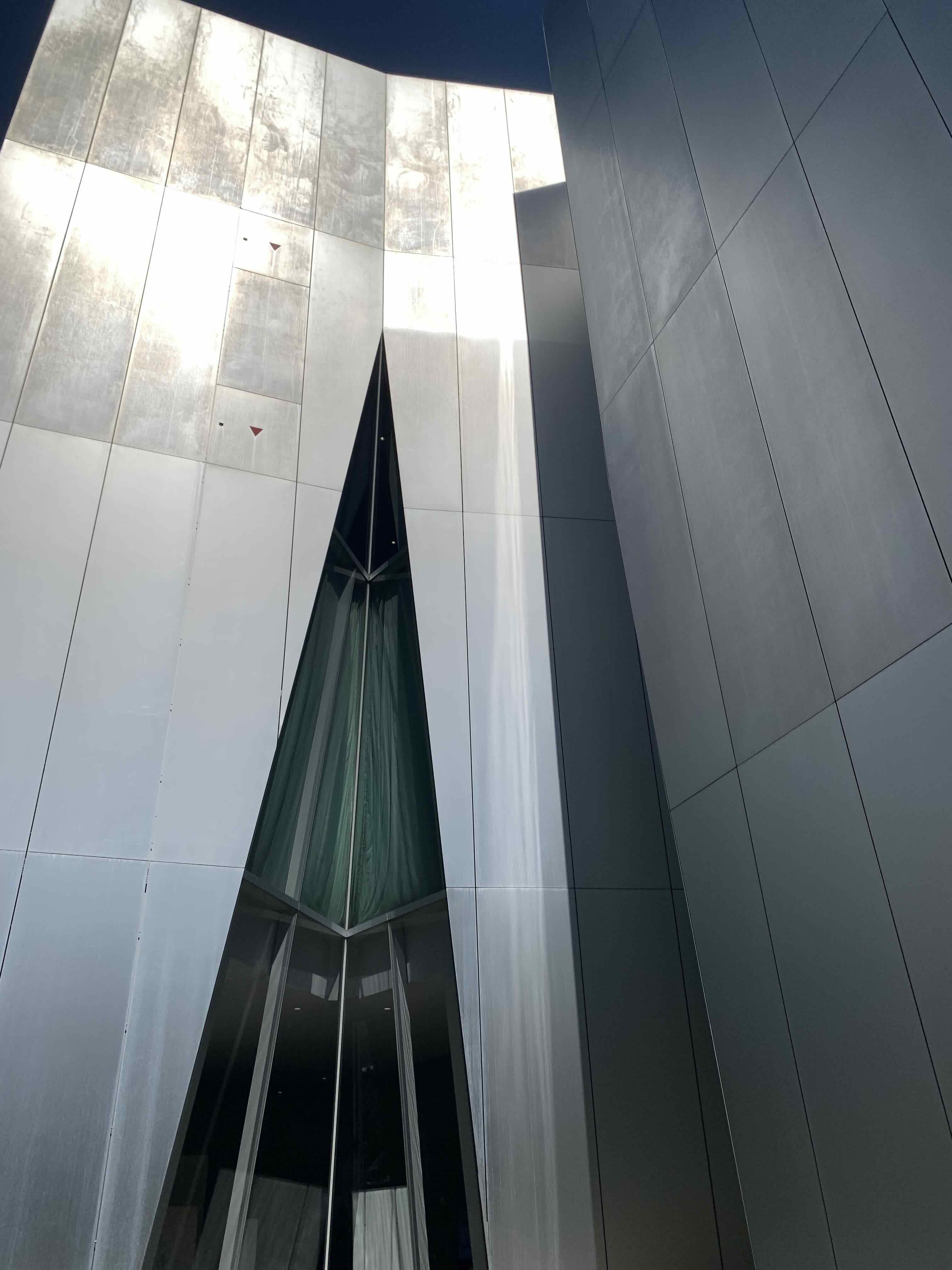
A building that looks like a leaf
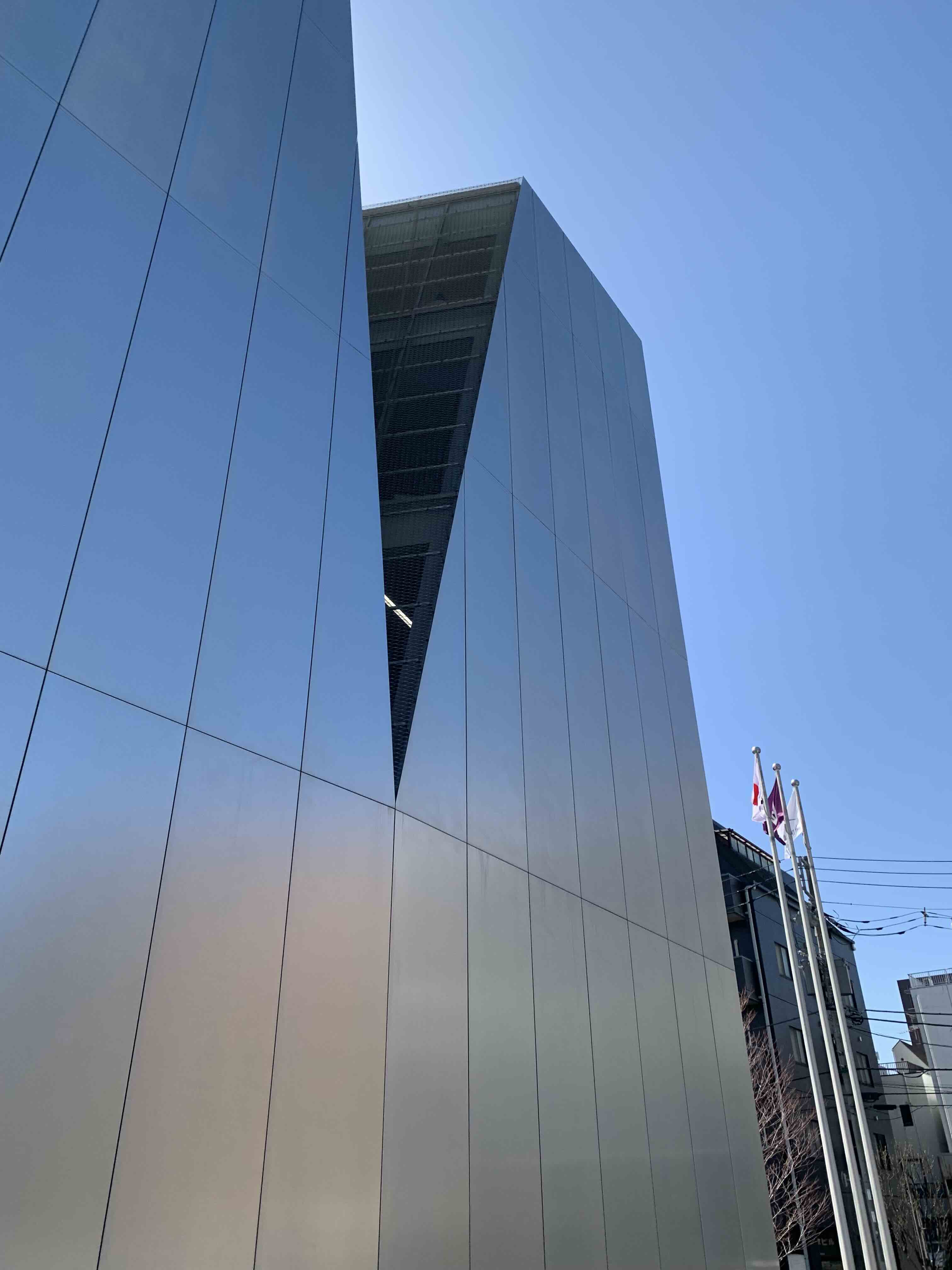
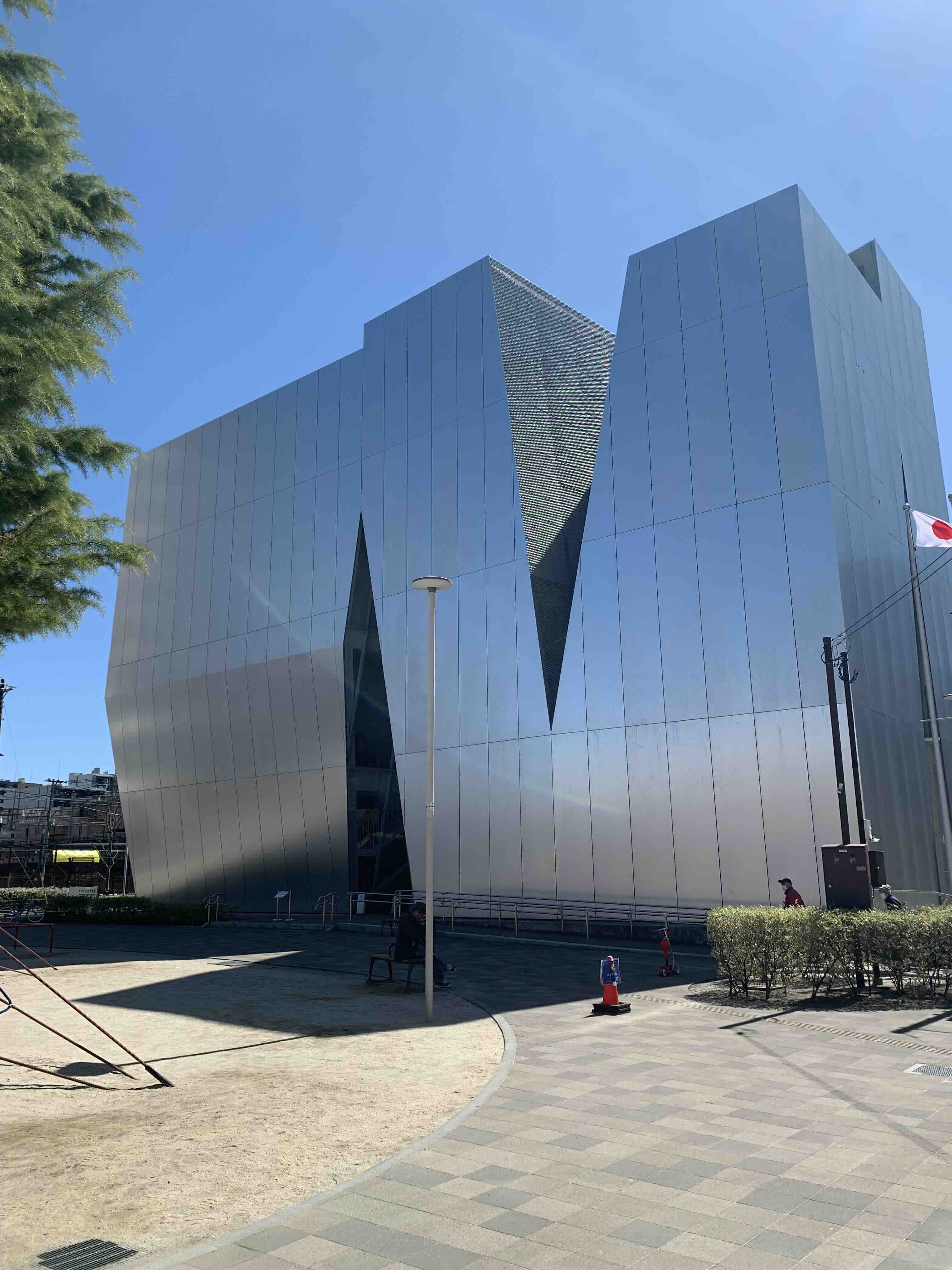
I hadn't seen any photos before I went there. The first thing that struck me was the architecture. The building is clad in silver aluminum, with sharp angles and surfaces that reflect the sky depending on the time of day. There’s something ethereal about this structure—an almost paradoxical lightness for a concrete building. I immediately thought of washi, Japanese paper—that thin sheet stretched over a bamboo frame. It’s probably no coincidence. Hokusai never stopped working on paper. His entire body of work is a dialogue with this material.
The interior mirrors the exterior: understated, refined. The museum is small—smaller than I expected. But this intimate scale creates something precious—a sense of closeness to the works, a kind of contemplation you don’t find in large state museums. You’re not just walking through; you’re really looking.
A man who has never stopped painting
The collection traces Hokusai’s life through his successive addresses in Tokyo—he moved more than ninety times during his lifetime—often because he preferred to leave rather than clean up, and sometimes for no apparent reason. This urban nomadism struck a chord with me. There is something profoundly modern about this image of an artist who carries his work from one neighborhood to another, who has no permanent studio, no bourgeois stability.
One anecdote really struck me. A visitor who stopped by his home found him sitting on the floor, surrounded by crumpled sheets of paper, absorbed in drawing. Not at a table, not in a clean and orderly setting—on the floor, in the midst of the chaos of his own creative process. That image says it all about his relationship to creation: frenetic, compulsive, and completely devoid of superficial ego. He wasn’t posing as an artist. He was drawing.
That’s something I recognize, albeit on a much smaller scale. Dry pastels, too, create their own mess—dust, stained fingers, crumpled sheets of paper. There’s something about this medium that resists neatness and detachment. You’re always right in the thick of the action.
What I Didn't Know: Hokusai, the Teacher
The part that surprised me the most was the section devoted to his role as a teacher. Hokusai produced a series of instructional sketchbooks—the Hokusai Manga —in fifteen volumes, intended to teach the techniques of Japanese printmaking and drawing. Thousands of motifs, human figures, animals, landscapes, waves, and plants. A visual dictionary of astonishing richness.
Some of the volumes were available for consultation in the museum. This isn’t mere popularization. It’s transmission in the truest sense—that commitment to making his knowledge visible, to breaking down the process so that others can replicate it, learn it, and go beyond it. A master in the artisanal sense of the word.
I wasn't familiar with this aspect of his work. Or rather, I was vaguely familiar with it, the way one is vaguely familiar with something one has never taken the time to examine. But standing there, looking at the prints, it was something else entirely. Hokusai wasn't afraid to make his knowledge accessible. He wasn't afraid of being copied. He wanted his drawings to spread.
What I've taken away from it
I work in dry pastel, creating landscapes inspired by Japan—its forests, its light, its skies. Visiting this museum didn’t change my technique. But it reaffirmed something essential: artistic practice, when it’s truly alive, doesn’t look like what we imagine from the outside. It’s often chaotic, obsessive, and humble in its relationship to the medium.
Hokusai signed some of his later works "Gakyō Rōjin Manji " — "the old man mad about painting." He had spent eighty-nine years painting, and he felt he was just getting started.
That may be the only ambition worth having.

_-_left_hand_screen.jpeg)